
Veteran Addiction Treatment Hawaii: For Service Members
By | August 3rd, 2026
If you’re reading this, you’re likely worried about a veteran you love — a parent, spouse, sibling, or grown child who came back from service carrying wounds that don’t show up on a medical chart. You’ve seen the changes: the irritability, the withdrawal, the drinking that started as unwinding and turned into something darker. You may have wondered whether veteran addiction treatment Hawaii can actually help someone who has been through combat, military sexual trauma, or the disorienting shift back to civilian life. The short answer is yes — but only when the care is built for the unique experiences of those who served. Mana Recovery Center offers veteran addiction treatment Hawaii designed specifically around the needs of service members and military families, with TRICARE coverage accepted and trauma-informed programming that meets veterans where they are.
Schedule a confidential assessment for your veteran family member by calling (808) 736-1527 today.
Why Do Veterans Face Higher Rates of Substance Use?
Veterans face higher rates of substance use because combat trauma, military sexual trauma, chronic pain, and transition stress drive self-medication with alcohol and drugs. The numbers tell a story that anyone who has loved a veteran already knows intuitively. Service members face distinct pressures that civilians rarely encounter, and those pressures create a perfect storm for substance use disorders. Combat exposure, military sexual trauma, chronic pain from service-connected injuries, and the profound identity shift of transitioning out of the military all contribute to rates of alcohol and drug use that consistently exceed civilian averages.
Combat trauma rewires the nervous system. Hypervigilance, hyperarousal, and intrusive memories don’t simply stop when a deployment ends — they follow service members home and can drive self-medication with alcohol or other substances. For many veterans, drinking becomes a way to quiet the noise. What starts as a few beers to sleep through the night can escalate into alcohol use disorder within months.
If you notice your veteran family member drinking more heavily or using substances to cope, reach out now. Call (808) 736-1527 to speak with our team about veteran addiction treatment Hawaii options.
Military sexual trauma adds another layer of complexity. MST survivors often carry deep shame and mistrust that makes traditional talk therapy feel unsafe. This is one of the reasons a one-size-fits-all treatment approach fails many veterans. They need care that understands the specific nature of military trauma and responds with proven, trauma-informed methods.
Transition stress is arguably the most underestimated factor. After years in a highly structured environment with clear mission and purpose, the shift to civilian life can feel like falling through a trap door. Loss of identity, difficulty relating to civilian coworkers, and the absence of the camaraderie that defined their daily existence can create a void that substances fill all too easily.
What Makes Veteran Addiction Treatment Hawaii Different?
Veteran addiction treatment Hawaii needs to look different from standard treatment because the underlying drivers of addiction in this population are different. At Mana Recovery, every aspect of care is designed with the understanding that service members and their families carry experiences that require specialized attention.
Trauma-informed care is the foundation. This means every therapist, every group facilitator, and every staff member operates from the understanding that trauma may be present and that retraumatization must be actively avoided. For veterans, this is non-negotiable. The therapy environment must feel safe enough to allow genuine vulnerability without triggering the defenses that kept them alive in combat but block healing in treatment.
The treatment team includes professionals who understand military culture — the values of mission, loyalty, and unit cohesion that shape how service members see themselves and the world. When a veteran hears that their struggle is understood within the context of their service, rather than pathologized as a personal failing, the door to recovery opens wider.
Family involvement is another critical differentiator. Military families experience the deployment cycle alongside their service member — the anxiety of separation, the strain of reintegration, the quiet worry that something has fundamentally changed. Including loved ones in the treatment process heals not just the individual but the entire family system.
Call (808) 736-1527 today to speak with our team about how our veteran-focused approach can help your family member.
TRICARE Coverage for Addiction Treatment in Hawaii
Yes, TRICARE covers addiction treatment for veterans and military families in Hawaii, and Mana Recovery accepts this coverage to reduce or eliminate out-of-pocket costs.
One of the most common questions families ask is whether treatment is affordable. For veterans and military families with TRICARE, the answer is encouraging. Mana Recovery accepts TRICARE coverage for addiction treatment, which significantly reduces or eliminates out-of-pocket costs for eligible beneficiaries.
TRICARE provides comprehensive mental health and substance use disorder coverage that includes outpatient treatment programs, individual therapy, group therapy, and specialized services. This means your veteran family member can access high-quality, trauma-informed care without worrying about whether they can afford it.
For veterans who don’t have TRICARE or whose benefits have lapsed, Mana Recovery works with other insurance plans and offers financial assistance options. No one is turned away because of insurance status alone. The team can verify benefits confidentially and explain exactly what coverage looks like before any commitment is made.
The Recover Strong Program for Veterans
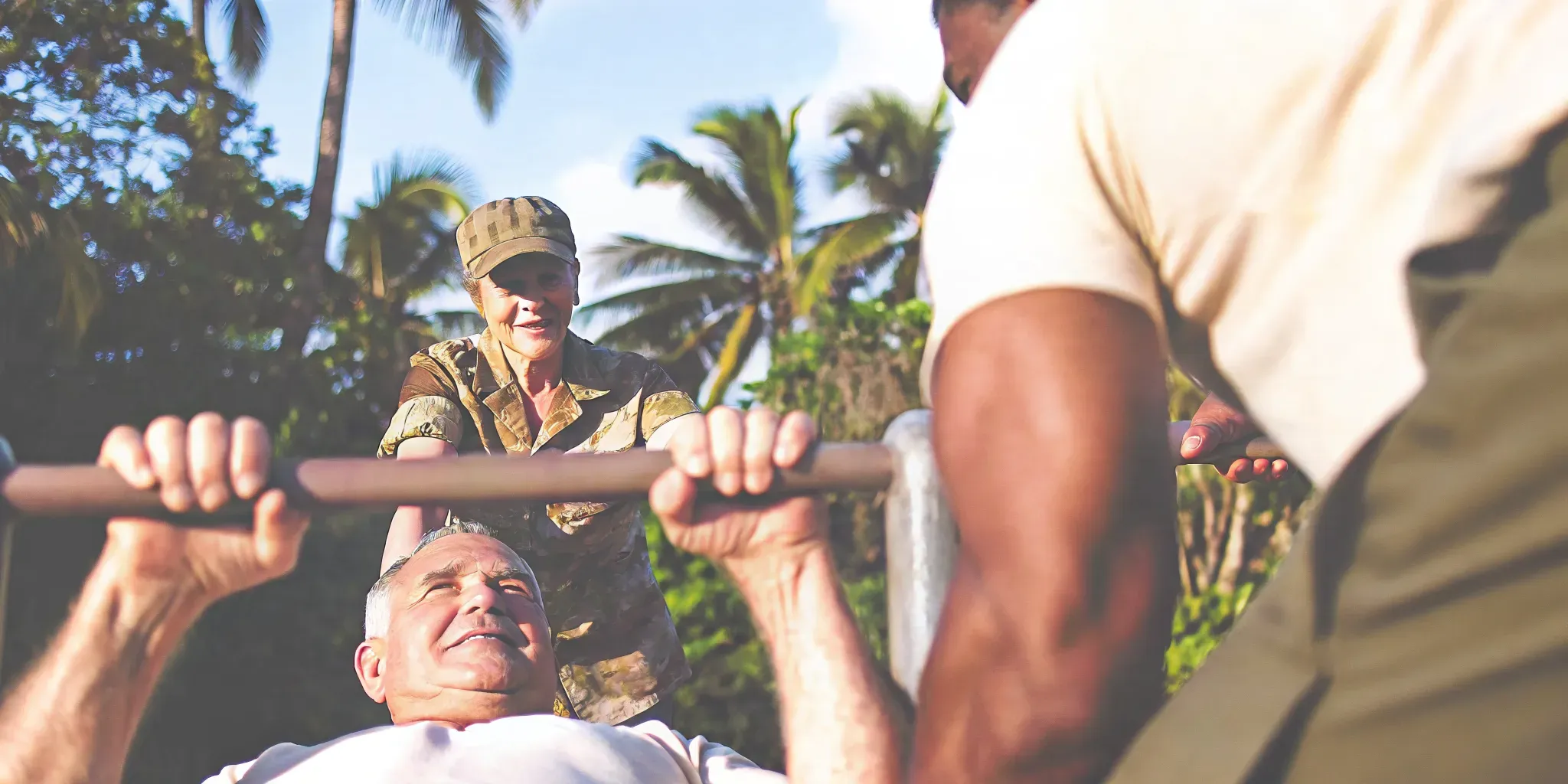
The Recover Strong exercise therapy program is especially effective for veterans because it builds camaraderie, rebuilds neural pathways, and offers a familiar mission-driven structure.
Many veterans respond best to treatment that includes a physical component. After years of physical training and mission-oriented activity, sitting in a traditional therapy room for hours doesn’t always click. This is where Mana Recovery’s signature Recover Strong program becomes a game-changer.
Recover Strong is a neuroscience-based exercise therapy program that promotes neuroregeneration and brain healing. It uses structured physical training — strength work, cardiovascular conditioning, and movement therapy — to rebuild the neural pathways that substance use has damaged. For veterans who are resistant to or frustrated by traditional talk therapy alone, Recover Strong offers an entry point that feels familiar: show up, put in the work, get stronger.
The program does more than rebuild the brain. It rebuilds camaraderie. Veterans working out alongside peers who share their experiences find the same kind of unit cohesion they lost when they left the service. The mission becomes recovery, the team becomes their fellow participants, and the structure becomes the framework for a new way of living.
This approach aligns with a growing body of research showing that exercise-based interventions reduce cravings, improve mood, and support long-term abstinence. For veterans, the physical and psychological benefits are amplified by the familiar structure and team environment.
Levels of Care Available for Veterans
Mana Recovery offers three levels of outpatient veteran addiction treatment Hawaii — PHP, IOP, and standard outpatient — each matched to the intensity of support needed.
Every veteran’s needs are different, and effective treatment meets them where they are. Mana Recovery offers three levels of outpatient care, each designed to provide the right intensity of support:
Partial Hospitalization Program (PHP): The most intensive outpatient option, PHP runs 4-5 days per week, 6-8 hours per day. It includes daily group therapy, individual counseling, Recover Strong sessions, and medical oversight. This is ideal for veterans who need significant structure and support while living at home.
Intensive Outpatient Program (IOP): A moderate level of care, IOP runs 3-5 days per week, 4-5 hours per day. It’s a strong fit for veterans transitioning from PHP or those who need substantial support while beginning to return to work or other responsibilities.
Standard Outpatient Program: The most flexible option, this involves 2-3 sessions per week and works well for veterans who have completed higher levels of care or who have strong external support systems.
Each level incorporates trauma-informed therapy, family involvement when appropriate, and the Recover Strong program. Treatment plans are individualized based on each veteran’s specific needs, co-occurring conditions, and recovery goals.
How Do You Help a Veteran Who Doesn’t Want Treatment?
The most effective approach is to choose the right moment, use calm “I” statements, offer practical help navigating the process, and connect them with peers in recovery.
This is often the hardest part. You can see that your veteran family member needs help, but they don’t agree. They may minimize their substance use, insist they have it under control, or refuse to even discuss the topic.
Start by choosing the right moment. Avoid bringing it up during or immediately after a drinking episode or when tensions are high. Find a calm, private time when you can speak honestly without accusation. Use “I” statements: “I’m worried about you” rather than “You have a problem.”
Offer to help navigate the process rather than demanding they get help. For many veterans, the idea of calling a treatment center, figuring out insurance, and showing up to an unfamiliar place feels overwhelming. Offer to make the first call with them or to drive them to an initial assessment.
Connect them with other veterans who have gone through treatment. Peer support is powerful in military culture. Hearing from someone who has been where they are and come out the other side can break through defenses that family members alone cannot reach.
Frequently Asked Questions About Veteran Addiction Treatment in Hawaii
What is the difference between boundary-setting and controlling behavior?
Setting a boundary is about communicating your own limits and needs — for example, “I won’t have alcohol in the house” or “I can’t continue to cover for you when you miss work.” Controlling behavior tries to dictate the other person’s choices. Boundaries protect your well-being; control attempts to manage someone else’s.
How do I handle my veteran family member’s anger or backlash when I bring up treatment?
Anger is common when someone feels confronted about their substance use. Stay calm, avoid matching their intensity, and restate your concern from a place of love. If the conversation becomes unsafe, step away and revisit it later. You are not responsible for their reaction — you are responsible for speaking the truth as you see it.
Can I set boundaries without enabling my loved one’s addiction?
Yes. Boundaries are the opposite of enabling. Enabling protects someone from the consequences of their actions; boundaries allow those consequences to exist while protecting your own emotional and physical health. For example, refusing to lie to an employer about a missed shift is a boundary, not a punishment.
What if the veteran and I live together — how do boundaries work in shared spaces?
Living with someone who is actively using substances requires clear, consistent boundaries around shared spaces. This might include agreements about not using in the home, safe storage of medications, and what you will do if those agreements are broken. A therapist can help you create a living plan that protects both of you.
How do I help a veteran who doesn’t believe they need addiction treatment?
This is one of the hardest positions to be in. Continue expressing your concern calmly and consistently. Offer specific examples of behavior you’ve observed. Connect them with other veterans in recovery who can speak from shared experience. And take care of your own well-being through support groups for families of those with substance use disorders.
What treatment options exist specifically for military families?
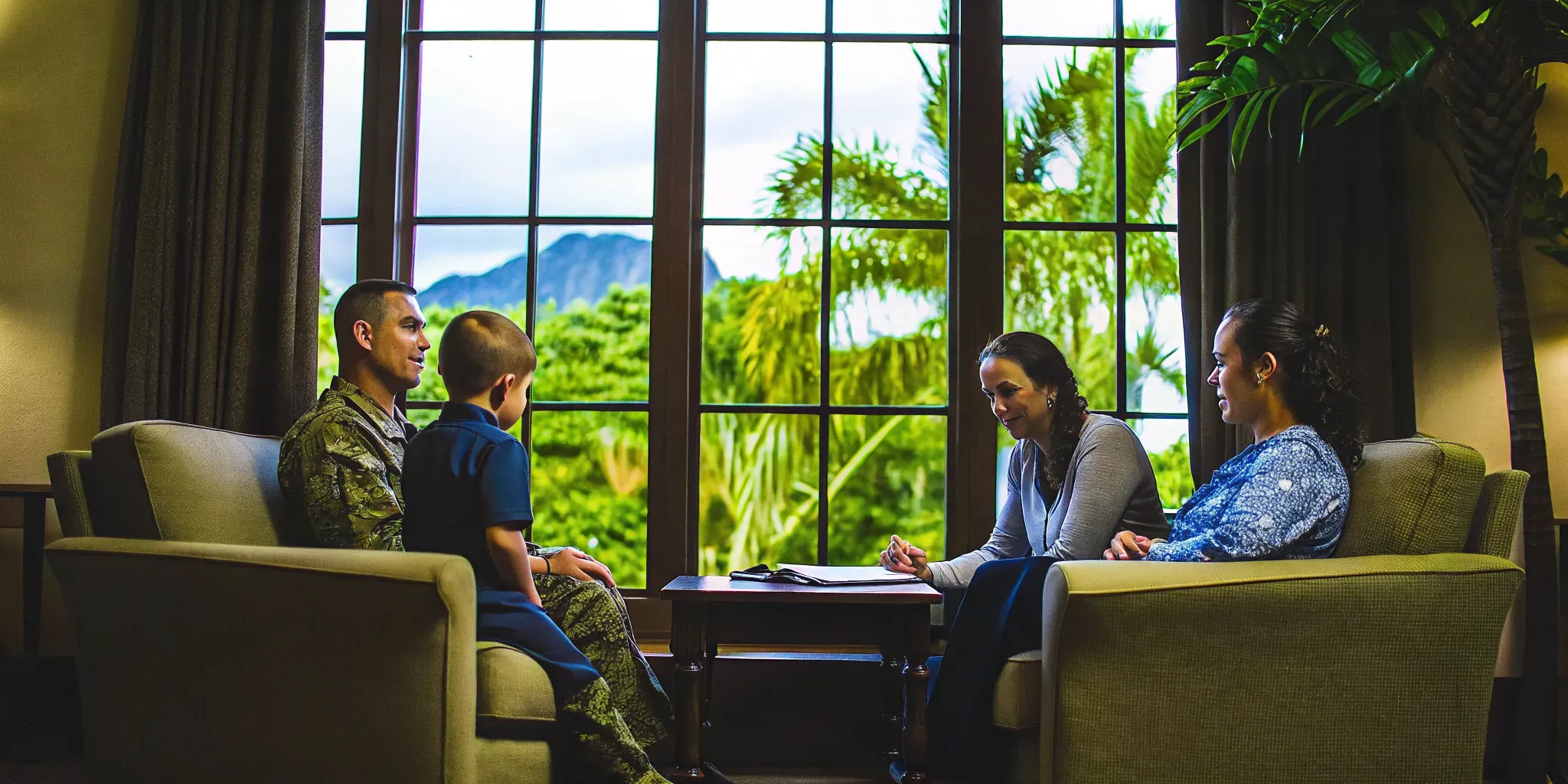
Mana Recovery offers family therapy as part of the treatment process, recognizing that addiction affects the entire family system. Family members can participate in counseling sessions, educational groups, and support programming designed to help the whole family heal together.
Does TRICARE cover outpatient addiction treatment in Hawaii?
Yes. TRICARE covers outpatient treatment programs including PHP, IOP, and standard outpatient care at approved facilities like Mana Recovery. Coverage includes therapy, group sessions, and medically necessary services. The team can verify your specific TRICARE plan benefits during a confidential assessment.
Take the Next Step for Your Veteran Family Member
You don’t have to navigate this alone. Mana Recovery Center is here to help you and your veteran family member find a path forward. Our team understands military culture, accepts TRICARE, and specializes in trauma-informed, whole-person care that treats the underlying causes of substance use — not just the symptoms.
Call (808) 736-1527 now to speak with our team about veteran addiction treatment Hawaii options and TRICARE coverage for your family member.
